Why Good Handmade Fonts Are a Practical Choice for Creative Business Owners
For any small business owner, the visual identity of your brand is a practical business asset. It’s what makes your café menu inviting, your product packaging trustworthy, and your social media posts recognizable. Among the most powerful—and often overlooked—tools for building that identity is your choice of typeface. Today, I want to talk about Good Handmade, a festive and merry typeface that goes beyond mere decoration to become a functional part of your brand’s toolkit.
The Personality and Practical Appeal of Good Handmade
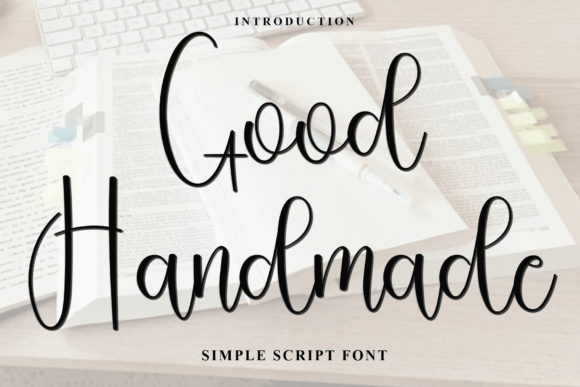
Good Handmade is a script font with a distinct personality: whimsical, festive, and full of decorative charm. Its strokes have a hand-crafted feel that evokes warmth and authenticity. This isn’t a rigid, corporate font. Its mood is one of celebration and personal touch, making it exceptionally well-suited for businesses that want to communicate craftsmanship, care, and a joyful customer experience.
From a purely practical standpoint, this visual appeal translates directly into brand alignment. When your target customers see whimsical flair and enchantment in your typography, they instantly get a sense of your brand’s values. For a handmade soap seller, a boutique bakery, or a lifestyle coach offering creative workshops, this typeface can visually confirm what your business promises: something special, personal, and thoughtfully made.
Applying Good Handmade to Real Business Materials
The true test of a font is how it performs across the everyday materials you use to run your business. Good Handmade shines as a display font—perfect for elements where you want to make a strong, immediate impression.
Consider your logo or business name on your website header. Using Good Handmade here establishes your brand’s character from the first glance. On product labels and packaging, it adds that touch of premium craftsmanship, making a candle or a jar of preserves feel like a gift. For a café, it can turn a simple menu into an inviting piece of art, highlighting special items or seasonal offerings.
In digital spaces, this consistency is crucial for recognition. Your Instagram post graphics, Pinterest pins, and website banners that use Good Handmade create a cohesive visual thread. Customers scrolling through their feed will begin to associate that merry, handwritten style with your business, building memorability without you having to repeat your logo everywhere. Even practical items like thank-you cards and shipping label stickers become subtle brand touchpoints when they carry your distinctive typography.
Realistic Examples for Different Businesses
Let’s get specific. A bakery might use Good Handmade for the name of each pastry on its display case signage, paired with a clean sans-serif for the price and description. A maker of handmade candles could use it exclusively for the product name on the label, making each scent feel unique and artisanal. A beauty brand selling natural products could use it for the brand name on the packaging, suggesting purity and personal care. For an online shop selling vintage goods, it could be the font for category headers and promotional banners, enhancing the curated, nostalgic feel.
The key is to use it where personality matters most. It’s your accent font, your headline font, your logo font—the voice that shouts (joyfully) what your brand is about. For longer text, like product descriptions on your website or the terms on a menu, you’ll need a more readable companion font.
Ensuring Readability Across Different Touchpoints
A beautiful font only works if it’s readable where it matters. Because Good Handmade is a decorative script, its primary role is in larger sizes. Test it thoroughly.
Print out a sample at the size you’d use on a small product label. Can you read the key word clearly? View it on a mobile screen as a social media thumbnail. Does it retain its character without becoming a blurry squiggle? This practical testing prevents a beautiful brand choice from becoming a functional headache. In most cases, Good Handmade will be perfectly legible for the short, impactful phrases it’s meant to handle—your business name, a headline, a call-out phrase—across both print and digital mediums.
Practical Steps Before Committing to Good Handmade
Before you redesign your entire brand around a new typeface, take a measured approach. First, check the commercial license. As a business owner, you must ensure your font license allows use on physical products, packaging, digital templates, and client work. Using a font without the proper license can lead to legal issues, so this is a non-negotiable first step.
Next, experiment with pairing. Good Handmade, like many expressive script fonts, needs a practical partner. A simple, clean sans-serif font (like a geometric or humanist sans) or a readable serif font for body text creates balance. This pairing makes your brand materials both distinctive and easy to consume. For example, use Good Handmade for your headline “Summer Collection,” and a neutral sans-serif for the paragraph listing the items. This approach maintains whimsy without sacrificing clarity.
Finally, create a mock-up. Apply Good Handmade to a mock business card, a sample Instagram post, and a label design. See how it feels as part of a system. Does it align with your other design assets? Does it feel versatile enough for the various materials you’ll need? This small investment in testing ensures the font is a practical long-term fit, not just a fleeting aesthetic crush.
The Business Value of Consistent Typography
Choosing and consistently applying a typeface like Good Handmade does more than make things look nice. It builds professionalism by showing deliberate, cohesive design choices. It builds trust by presenting a polished, intentional brand to your customers. It builds recognition, turning scattered marketing materials into a unified brand story.
For the entrepreneur managing every detail, your typeface is a design asset you set once and then reap the benefits from every day. When your packaging, your website, and your social content all speak with the same visual voice—a voice like the merry, enchanting one offered by Good Handmade—you communicate stability and care. Customers notice consistency, and that consistency translates into confidence in your business.
In the end, fonts are practical tools. Good Handmade, as a festive script typeface, is a tool for businesses that want their visual identity to whisper (or cheer) craftsmanship, joy, and a personal touch. By applying it strategically to your headlines, logos, and key accents, and supporting it with readable, neutral fonts for longer text, you can create a brand experience that looks both distinctive and dependable—a real advantage in any market.